
A Flexible Mind is Harder to Manipulate
2026-05-06 | reading time: 5 minutes | brain, mindset, mental freedom, flexible thinker, critical thinker, clarity
In a world of algorithms designed to confirm our beliefs, full of misinformations, opinions, and group thinking, we need people who are aware and constantly improving the quality of their thoughts. Why? Cause your thoughts matter, your voice matters, your actions matter! How you shape your mindset and what you bring into the world leads towards change, for better or for worse. Use this power wisely.
Creating a Flexible Mind
Our brains tend to fall into three states when exploring a topic:
A.) Intellectually overconfident, believing you are the authority and your way is the only way.
B.) Obeying or Conforming, following whatever the majority or authority says.
C.) Flexible thinking, listening carefully, open and the willing to change your mind when better evidences or arguments appear.
Spoiler: we carry all three tendencies, some more of one or the other. Option C, the flexible thinker, is the one that will reward you personally and professionally the most. It gives you mental freedom, but demands constant effort and practice.1 It is not something you either have or don’t have, it is something you train and schools rarely teach it. So I will!
… Your identity and your worth do not depend on any idea or ideology, so let go, loosen your attachment. e.g. You can be vegan and admit that a single steak can contain certain nutrients or amino acid profiles that requires combining foods (grains + legumes) to match. On the other hand you can be a meat lover and still admit that much of modern livestock farming raises serious ethical concerns.
… Give space and observe your emotions, but do not let them shut down your willingness to listen. Find a balance between emotions and rationality.
… Make peace with uncertainty. There are so many things we do not know: Where does our consciousness come from? What happens at the center of black holes? Does the universe is fundamentally deterministic or contains true randomness? And and and… It is alright, it is part of being a human. So within a conversation leave space for uncertainty, do not feel the need to conclude everything. Accept that no view is final.
📝 What topics trigger strong emotions in me? Where do I hold strong opinions?
Critical Thinking Guide
I saw following picture from different creators all over social media, based on this example, I will go over the principles:
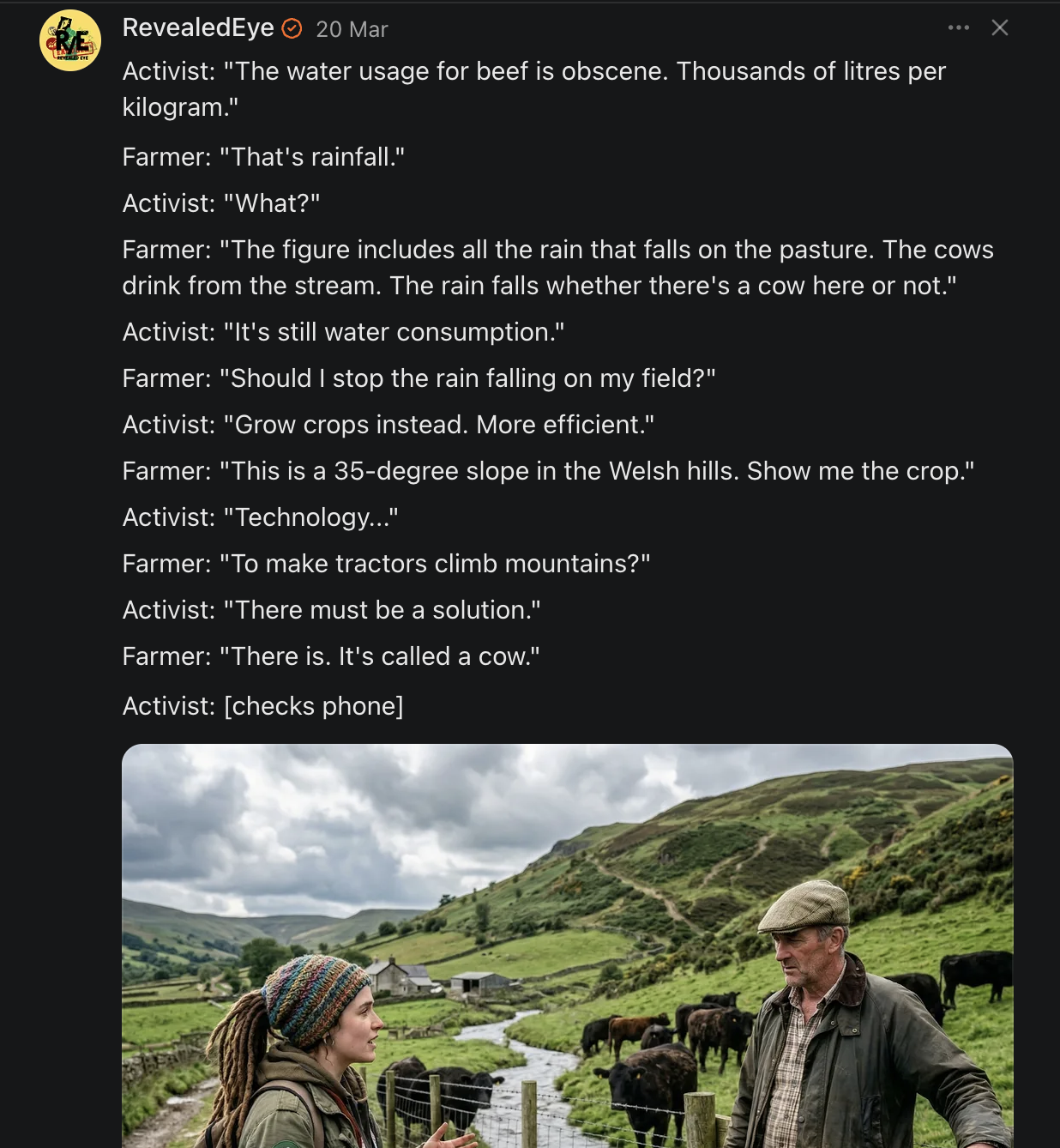
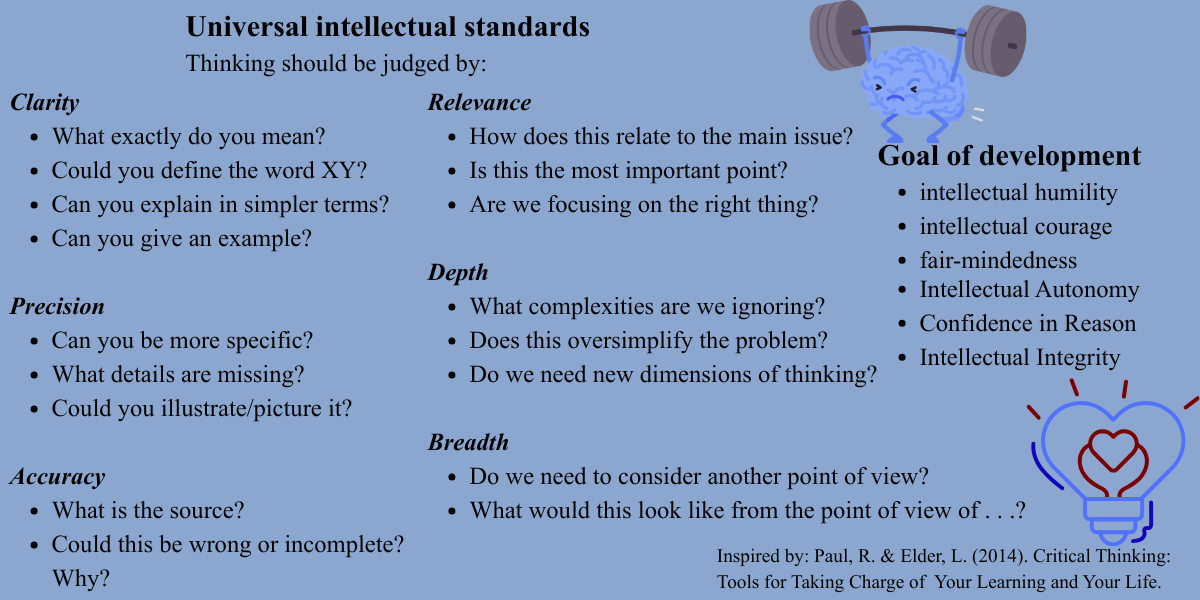
Clarity: Why do you think it is “obscene”? What type of farming are we talking about, and in which context?
Precision: How many litres are actually used, and what portion is rainfall? ⚠️Do not believe precision is accuracy! Precision in form of false statistic is often used to confuse.
Accuracy: No sources are provided. The derogatory portrayal of the activist suggests a one sided perspective. The AI generated image, along with the implication that cows drink directly from streams, is also questionable as this is not standard practice and can be even dangerous.
Relevance: The post is shared with a global audience but presents a very specific and limited farming example. As grazing system is not the standard, the example may not be relevant.
Depth: The argument does not consider different production systems or the broader concerns typically raised by activists. Instead, it simplifies a complex issue. This follows a common rhetorical pattern: selective framing, using a valid but narrow example to dismiss a broader concern. Social media, sellers, politicians and many others love to use it.
This is how the post could look when applying the previous principles:
Activist: “Beef has a very high water footprint the worldwide average is 15.400 liters per kilogram, which is 3 times more than a goat4.
Farmer: “In the UK grazing systems are very popular. In those systems combined with the high amount of rain in the UK 85% comes from rainwater5.In addition on Welsh Hills we are at a 35-degree slope where we can not grow any crops, live stock is a great solution to use that land.”
Activist: “Interesting. But what about the rest of the world?”
Farmer: “A significant share comes from different livestock systems and the amount of rain in that country7.
Activist: “Interesting. Worldwide groundwater use exceeds natural recharge8.70% of it is used for Agriculture9.It worries me deeply.”
Farmer: “This is indeed concerning. I believe better differentiation between production systems and within communities would improve the discussion.”
Activist: “I’m also concerned about the animal welfare.”
Farmer: “That’s a separate ethical domain. Important, but let’s keep it for another day.”
Now instead of a conflict we have a more accurate and productive discussion.
📝Choose one of the topics from your previous journaling answers and analyze it deeply, using the critical thinking guide above.
Between work, changing diapers, organizing household and trying to maintain hobbies, it is difficult for most people to analyze topics deeply. Reliable sources are hard to find, and clear answers to important questions often do not exist. Sometimes it feels like true objectivity is almost impossible. Let me know what topic you would like to explore more deeply. If you by any chance wanna create a platform focused on transparency and objectivity. I have ideas. So to all developers, journalists, and anyone who believes they could contribute to such a project: message me.
To everyone who read until here: A big thank you! It truly means a lot to me.
Lot’s of love and stay flexible 🧠!
Some sources used and worth to check out:1. Interview Zmigrod Leor, 2025: Why Some Brains Are Wired for Extremism
2. Elder and Paul: Universal Intellectual Standards
3. Paul Richard on youtube: Different parts
4. Mekonnen and Hoekstra, 2012: A Global Assessment of the Water Footprint of Farm Animal Products
5. Chatterton et al., 2010: The Water Footprint of English Beef and Lamb Production – A report for EBLEX
6. A simple explanation of the topic water and beef
7. Gerber et al., 2013: TACKLING CLIMATE CHANGE THROUGH LIVESTOCK
8. Gleeson et al., 2012: Water balance of global aquifers revealed by groundwater footprint
9. Margat and van der Gun, 2013: Groundwater around the World
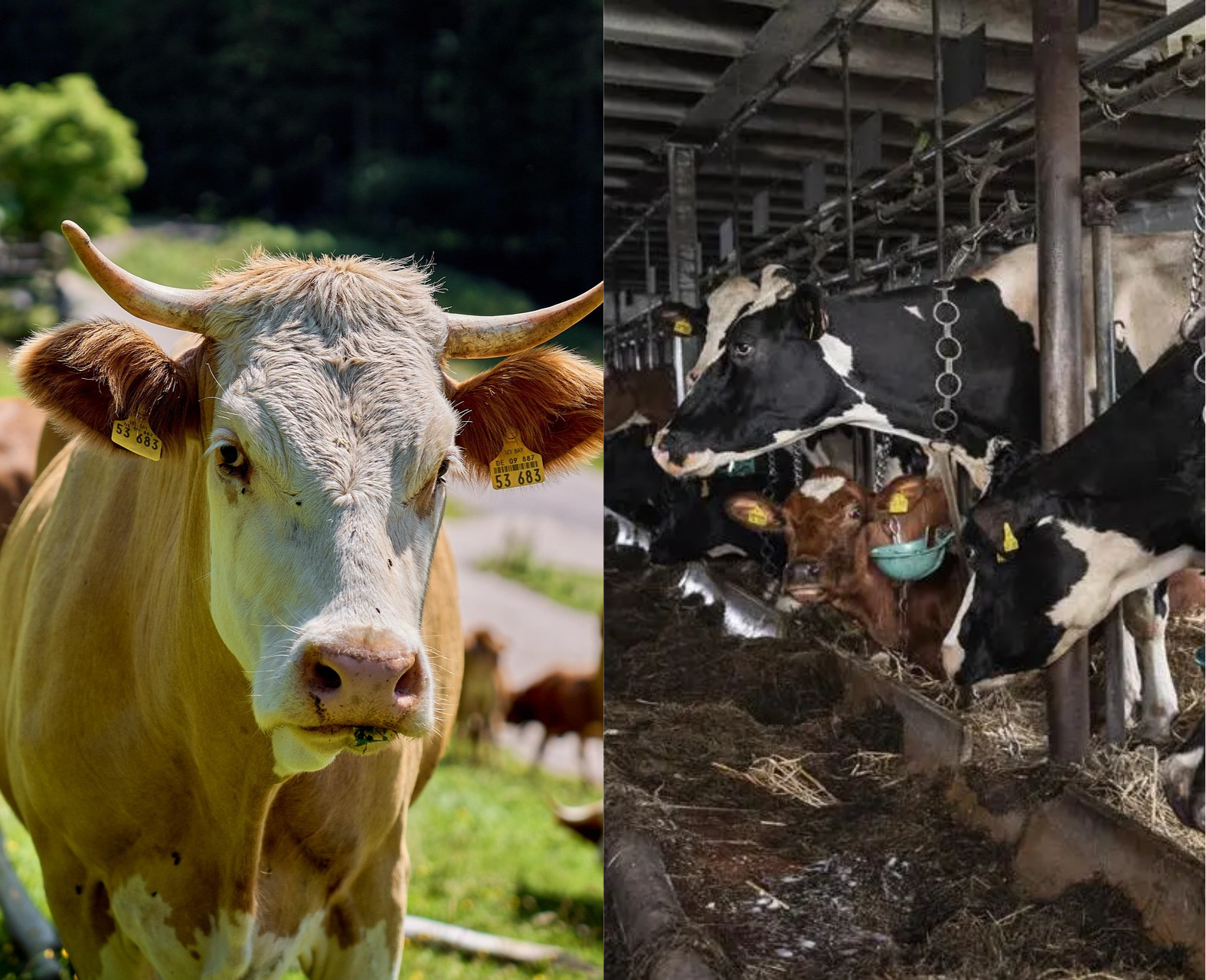
10. Pic Cow 1
11. Pic Cow 2